How SBLC Monetization Works in 2026: A Complete Guide for Businesses and Investors
In today’s fast-moving financial landscape, access to capital remains one of the biggest challenges facing businesses worldwide. Whether a company is expanding operations, financing international trade, investing in infrastructure projects, or improving liquidity, obtaining funding quickly can make the difference between success and missed opportunities.
One financial solution that continues to gain attention in 2026 is SBLC monetization. Businesses and investors increasingly use Standby Letters of Credit (SBLCs) as powerful financial instruments to secure funding without liquidating valuable assets. As global trade expands and financing requirements become more complex, SBLC monetization has become a practical way to unlock capital while preserving cash flow.
Understanding how SBLC monetization works can help businesses make informed financial decisions and leverage bank instruments more effectively.
What Is an SBLC?
A Standby Letter of Credit (SBLC) is a financial instrument issued by a bank on behalf of a client. It serves as a guarantee that payment obligations will be fulfilled if the client fails to meet contractual commitments. INVESTOPEDIA describes sblc as a bank-issued document that guarantees payment to a seller on behalf of a buyer, commonly used to facilitate secure international trade transactions.
SBLCs are commonly used in international trade, project finance, construction contracts, commodity transactions, and large corporate agreements. They provide assurance to beneficiaries that financial obligations will be honored, thereby reducing risk and increasing trust between parties.
Unlike traditional loans, an SBLC is not intended to be drawn upon under normal circumstances. Instead, it functions as a backup payment mechanism that strengthens the financial credibility of the holder.
Because SBLCs are issued by reputable banks, they are widely accepted across international markets and can often be used as collateral for financing purposes.
What Is SBLC Monetization?
SBLC monetization is the process of converting a Standby Letter of Credit into usable cash or credit facilities through a monetizer, financial institution, investment fund, or lender.
In simple terms, a monetizer evaluates the SBLC and uses its value as collateral to provide funding to the holder. Rather than waiting for the instrument to mature or simply holding it as a guarantee, the owner can unlock liquidity and gain access to working capital.
This process allows businesses to finance operations, fund projects, purchase inventory, expand internationally, or meet short-term financial obligations without selling company assets.
SBLC monetization has become particularly popular among companies involved in international trade, infrastructure development, energy projects, real estate investments, and import-export businesses.
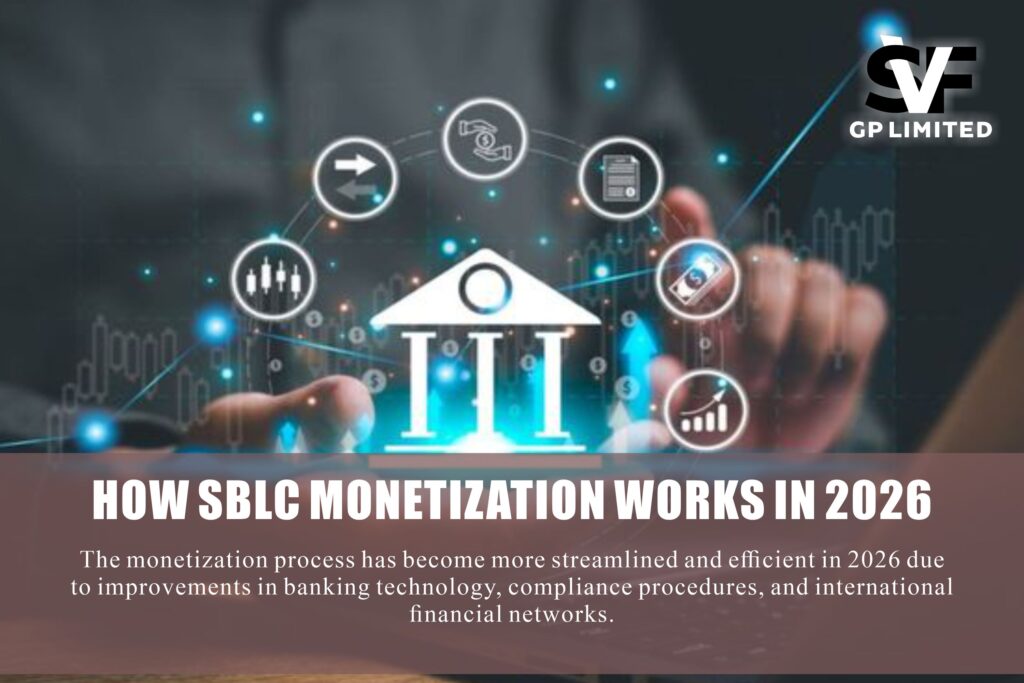
How SBLC Monetization Works in 2026
The monetization process has become more streamlined and efficient in 2026 due to improvements in banking technology, compliance procedures, and international financial networks.
The typical process includes the following steps:
1. Obtain a Bank-Issued SBLC
The first requirement is possession of a valid SBLC issued by a recognized bank. The instrument must meet the monetizer’s criteria regarding:
- Bank rating
- Instrument value
- Authenticity
- Transferability
- Compliance standards
- Validity period
Most monetizers prefer instruments issued by top-tier international banks because they present lower risk.
2. Submit Documentation
The SBLC holder submits relevant documentation for review. These documents may include:
- Copy of the SBLC
- Bank Comfort Letter (BCL)
- Corporate documents
- Passport copies
- Proof of business activities
- Project information
- Compliance documentation
The monetizer performs due diligence to verify the legitimacy of both the instrument and the applicant.
3. Instrument Verification
Once documentation is received, the monetizer verifies the SBLC through bank-to-bank communication.
Verification confirms:
- Authenticity of the instrument
- Issuing bank details
- Face value
- Expiry date
- Transfer conditions
- Compliance status
This step is critical because reputable monetizers only work with genuine financial instruments.
4. Monetization Agreement
After successful verification, both parties enter into a monetization agreement outlining:
- Funding amount
- Loan-to-value ratio
- Terms and conditions
- Repayment structure
- Fees and charges
- Funding timeline
The agreement provides clarity and legal protection for all parties involved.
5. Funding Disbursement
Following execution of the agreement, funds are released to the SBLC holder.
Depending on the transaction structure, the holder may receive:
- Cash funding
- Credit facilities
- Project financing
- Investment capital
- Trade finance support
Funding amounts often range between 60% and 90% of the SBLC’s face value, depending on risk assessment and market conditions.
Best SBLC Provider for Financing in 2026
Why Businesses Monetize SBLCs
Businesses choose SBLC monetization for several reasons.
1. Access to Immediate Liquidity
One of the primary benefits is the ability to convert a financial instrument into working capital quickly. This allows companies to seize business opportunities without waiting for traditional loan approvals.
2. Preserve Ownership
Unlike equity financing, SBLC monetization does not require business owners to surrender shares or ownership interests.
3. Flexible Funding
Monetized funds can often be used for:
- Business expansion
- International trade
- Project development
- Equipment purchases
- Real estate investments
- Debt restructuring
- Working capital
4. Faster Approval Process
Because the SBLC serves as collateral, approvals are often faster than conventional unsecured financing.
5. Enhanced Financial Flexibility
Companies gain access to additional capital while maintaining existing assets and operational control.
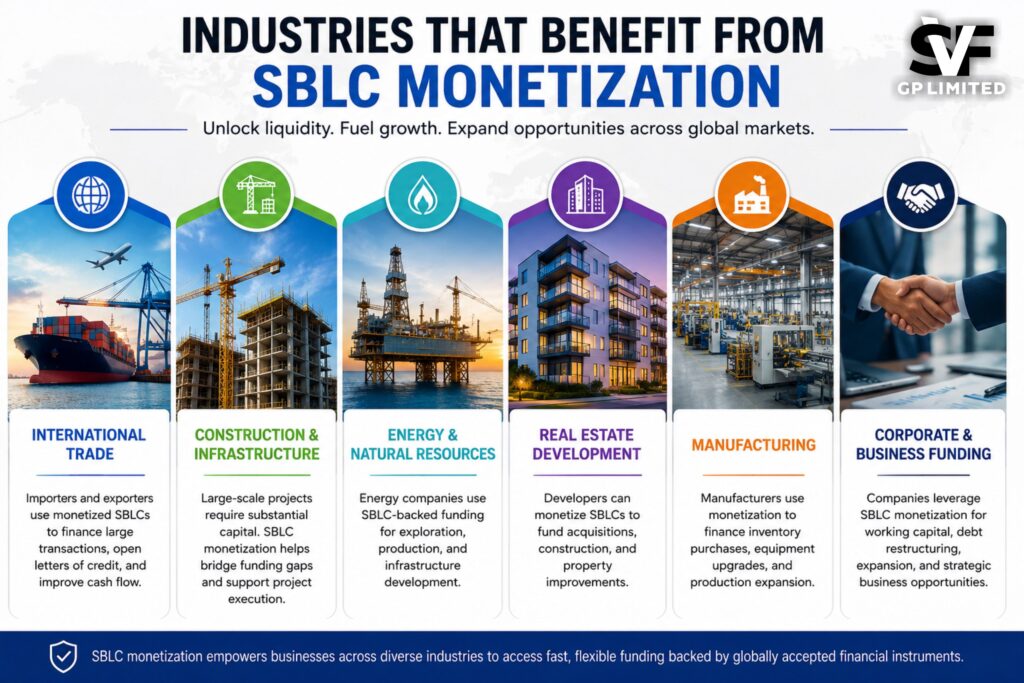
Industries That Benefit from SBLC Monetization
In 2026, SBLC monetization continues to support a wide range of industries.
1. International Trade
Importers and exporters frequently use monetized SBLCs to finance large transactions and improve cash flow.
2. Construction and Infrastructure
Large-scale projects often require substantial upfront capital. Monetized SBLCs help bridge funding gaps and support project execution.
3. Energy and Natural Resources
Energy companies use SBLC-backed funding for exploration, production, and infrastructure development.
4. Real Estate Development
Developers can monetize financial instruments to fund acquisitions, construction, and property improvements.
5. Manufacturing
Manufacturers use monetization to finance inventory purchases, equipment upgrades, and production expansion.
Key Requirements for Successful SBLC Monetization
Not every SBLC qualifies for monetization. Successful transactions generally require:
i. Strong Issuing Bank
The issuing bank’s reputation plays a major role in determining acceptance.
ii. Valid Instrument
The SBLC must be authentic, active, and compliant with applicable regulations.
iii. Clear Business Purpose
Monetizers prefer applicants with legitimate funding objectives and documented business activities.
iv. Compliance Documentation
Know Your Customer (KYC) and Anti-Money Laundering (AML) requirements remain essential in 2026.
v. Experienced Monetization Partner
Working with a reputable provider significantly improves transaction success rates and reduces risks.
Common Misconceptions About SBLC Monetization
Several misconceptions continue to circulate regarding SBLC monetization.
“SBLC Monetization Is Only for Large Corporations”
While large corporations frequently use SBLCs, many medium-sized businesses also benefit from monetization services.
“Monetization Means Selling the Instrument”
Monetization does not necessarily involve selling the SBLC. In most cases, the instrument remains part of a structured financing arrangement.
“The Process Takes Several Months”
Modern banking procedures and digital verification systems have significantly reduced processing times.
“Any SBLC Can Be Monetized”
Acceptance depends on bank quality, instrument structure, compliance standards, and transaction feasibility.
Risks to Consider
Like any financial transaction, SBLC monetization carries certain risks.
Potential concerns include:
- Working with unverified providers
- Hidden fees
- Regulatory compliance issues
- Poorly structured agreements
- Instrument verification failures
Businesses should conduct proper due diligence and work only with experienced financial professionals.
Choosing the Right SBLC Monetization Provider in 2026
Selecting the right monetization partner is one of the most important decisions in the process.
When evaluating providers, consider:
- Industry experience
- Track record
- Banking relationships
- Compliance standards
- Transparency
- Funding capacity
- Client support
A reliable provider like SVFGPLTD should clearly explain the transaction structure, timelines, requirements, and associated costs before proceeding.
Why SBLC Monetization Is Growing in 2026
The acceleration of SBLC monetization is the result of three converging factors: • Bank lending restrictions continue to limit traditional access to credit. • Companies seek non-dilutive solutions that preserve equity and governance. • Institutional investors show increased appetite for secured, structured financial instruments.
Credit Glorious, with over 40 years of operational expertise, stands at the center of this evolution, offering compliant and transparent structures for converting Standby Letters of Credit into deployable capital.
The Future of SBLC Monetization
The demand for alternative financing solutions continues to grow globally. As businesses seek more flexible ways to access capital, SBLC monetization is expected to play an increasingly important role in trade finance and corporate funding.
Advancements in banking technology, digital compliance systems, and cross-border financial infrastructure are making monetization transactions faster, safer, and more accessible than ever before. Industry experts and organizations such as the International Chamber of Commerce (ICC) and SVF GP LTD continue to emphasize the importance of standby letters of credit in supporting global trade and reducing transactional risks.
Companies that understand how to leverage financial instruments effectively can gain significant competitive advantages in today’s global marketplace.
Conclusion
SBLC monetization remains one of the most effective ways for businesses to unlock liquidity from bank-issued financial instruments in 2026. By converting a Standby Letter of Credit into usable funding, companies can finance growth, support international trade, execute large projects, and improve cash flow without sacrificing ownership or selling valuable assets.
The key to a successful transaction lies in working with experienced professionals who understand both the technical and regulatory aspects of financial instrument monetization.

Looking to Monetize an SBLC?
SVF GP Limited provides professional assistance for SBLC monetization, bank guarantees, project financing, trade finance solutions, and structured funding programs. Whether you need capital for international trade, business expansion, infrastructure projects, or investment opportunities, our experienced team can help guide you through the process from instrument review to funding.
Contact SVF GP Limited today to discuss your SBLC monetization requirements and discover how your financial instrument can be transformed into the capital needed to achieve your business goals.
Contact us today at StructuredFinance@svfgpltd.com
Visit www.svfgpltd.com to begin your journey toward safer, smarter, and more profitable financial solutions.


Comments
Post a Comment